Girls Can In Fact Sync

I did not discover Girls Don't Sync in some dark club at 4 a.m. I was 17, doomscrolling on TikTok late at night, when I should have been sleeping. Then it happened. A video surfaced of four women from diverse cultural backgrounds standing around two decks, absolutely tearing it up. The crowd was bouncing, the energy was contagious, and you could feel the joy through the screen. This is a movement.

That moment stuck with me because it captured something I had been feeling for a long time. Women were no longer just showing up in electronic music. They were reshaping it. They were rewriting what it looks like to own the booth and reimagining what a dance floor feels like.
Of course, women have always been present, even if the history books tend to overlook their names. Daphne Oram and Delia Derbyshire were experimenting with sound at the BBC Radiophonic Workshop long before anyone coined the term EDM. Wendy Carlos proved that synthesizers could reinvent classical music, and Suzanne Ciani made modular synthesizers sing. Later, DJ Rap and Jordana LeSesne were carving out space in jungle and drum & bass while Annie Mac was breaking artists on BBC Radio 1. These women laid the groundwork. But the real magic is what is happening now.

¹ For more on these pioneers, see: BBC Radio – The Radiophonic Workshop (Oram and Derbyshire); Wendy Carlos official site; Moog Foundation – Suzanne Ciani profile; DJ Rap official site; Red Bull Music Academy – Jordana LeSesne feature; BBC Radio 1 archives – Annie Mac.
Girls Don't Sync
Girls Don't Sync proves that DJing can be a collective, not a solitary, experience. Watching them feels like watching four friends pass tracks back and forth at the best house party you have ever been to. The difference is that the entire room is moving with them. Their DJ Mag HQ set captures that exact vibe: pure energy, pure joy, pure community. What started for me as a viral TikTok has become one of the most important collectives in the UK scene.

Nia Archives

Nia Archives is the reason jungle feels like it has been reborn. She is not just keeping the genre alive; she is reinventing it for a new generation. Her Boiler Room set, set in Nottingham for International Women's Day, is pure fire. A fast-paced and emotional ride through breakbeats and samples. Nia is showing the world that jungle has just as much power in 2025 as it did in 1995.
Honey Dijon

Honey Dijon is house music royalty. She is not only a DJ but also a cultural voice, an advocate, and someone who makes the dance floor feel like home. She keeps house music tied to its roots in queer and Black communities while pushing it forward for new audiences. Her Boiler Room Berlin set is essential viewing and a masterclass in both presence and sound.
Peggy Gou

Peggy Gou has become a global star, and it is not hard to see why. Her sets are magnetic, her charisma is undeniable, and she makes even massive festival stages feel personal. The Boiler Room x Dekmantel set is the moment that put her on the map. Watch it once and you will understand why she is one of the most beloved DJs on the planet.
Charli XCX

Charli XCX blew the internet apart when she stepped into the booth for her Boiler Room PARTYGIRL set in Ibiza. Pop star in the DJ booth? It felt chaotic, raw, and completely her. She blurred the line between underground and mainstream, and suddenly everyone was talking about it. It showed that the walls between genres and roles are thinner than we think.
ZULAN
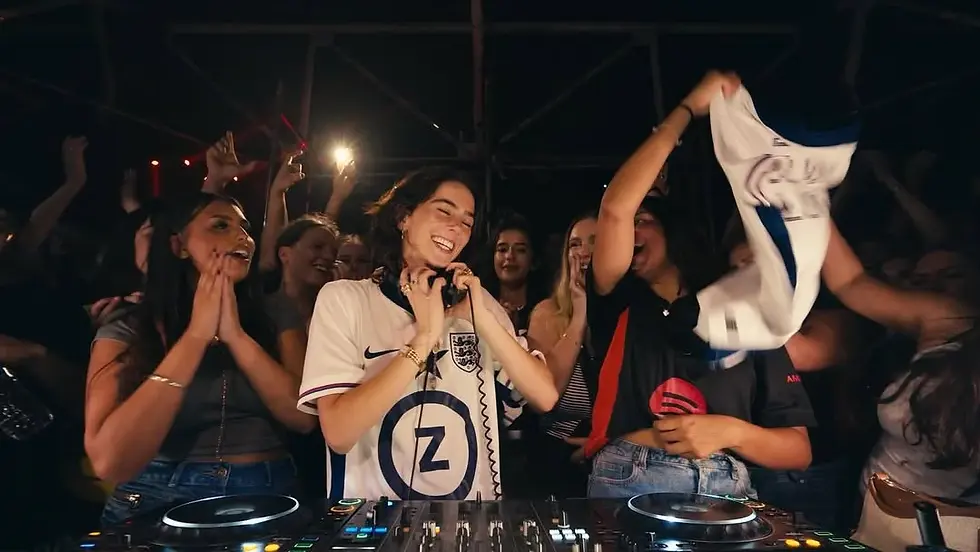
ZULAN is impossible to pin down, and that is exactly why she matters. Her work spans YouTube, SoundCloud, and club nights, never sticking to one genre or format. She is part of a generation that refuses to play by the rules. Her YouTube channel is the best place to dive in and hear how she is experimenting with the future of sound in real time.
Sherelle

Sherelle is speed, power, and chaos in the best way. She is pushing footwork, jungle, and 160 BPM mayhem into the spotlight, and her energy behind the decks is unmatched. Her Boiler Room set in London shows exactly why crowds cannot sit still when she plays. Sherelle is not just a DJ. She is a lightning bolt.
Charlotte de Witte

Charlotte de Witte is techno's global ambassador. Her sets are hypnotic and relentless, the kind that pull you in and make time vanish. Her Tomorrowland 2022 set proves why she is one of the most respected DJs in the world: sharp, powerful, and magnetic.
Amelie Lens

Amelie Lens has carved out her own lane in techno. Her sets are both euphoric and intense, striking a balance between heaviness and surprising warmth. Her Awakenings Festival set has become a fan favorite, demonstrating her ability to control a massive crowd with subtle shifts in sound.
Jayda G

Jayda G is joy in motion. Her sets feel like dancing in the sun with your closest friends. They are funky, soulful, and full of heart. Her Boiler Room London set captures that perfectly, reminding us that dance music can uplift as much as it can pound.
Yaeji

Yaeji brings her own world to the booth. Mixing house, hip-hop, and her bilingual vocals, she creates sets that feel personal and intimate, even on the biggest stages. Her Boiler Room New York set is the perfect introduction, showing how vulnerability and cool can coexist in electronic music.
Sara Landry

Sara Landry has earned the nickname “hard techno priestess” for a reason. When she steps behind the decks, she brings raw intensity and ritual energy. Her Boiler Room set is a perfect showcase. In that room, she controls the vibe, shifts the energy, and takes listeners somewhere they didn’t know they needed to go.
What Comes Next
The future of women in electronic music is not about catching up. It is about ownership. The days of women being added to a lineup as a token name are fading. What is happening now feels bigger. Women are running their own collectives, shaping their own communities, and building spaces that reflect the energy of the dance floor itself.

Technology is making this shift impossible to ignore. A DJ can go from mixing in her bedroom to having a global audience in a matter of weeks. TikTok clips, livestreams, and Boiler Room-style platforms are rewriting how artists get discovered, and younger fans are growing up expecting diversity to be the baseline, not a favor. The gatekeepers are no longer the only voices that decide who gets heard.
What comes next is not just more women on the stage. It is more women creating the stage. You will see them running labels, curating festivals, and mentoring the next wave of talent. One viral set or one festival slot will keep opening doors for others, turning individual wins into
collective change.
Electronic music has always thrived on rebellion and reinvention. Right now, women are the ones driving that energy forward. They are not asking for space; they are building it. The future of EDM will not just be about who plays the music. It will also be about who creates it. It will be about who defines the culture. And women are already writing that story.


Comments